
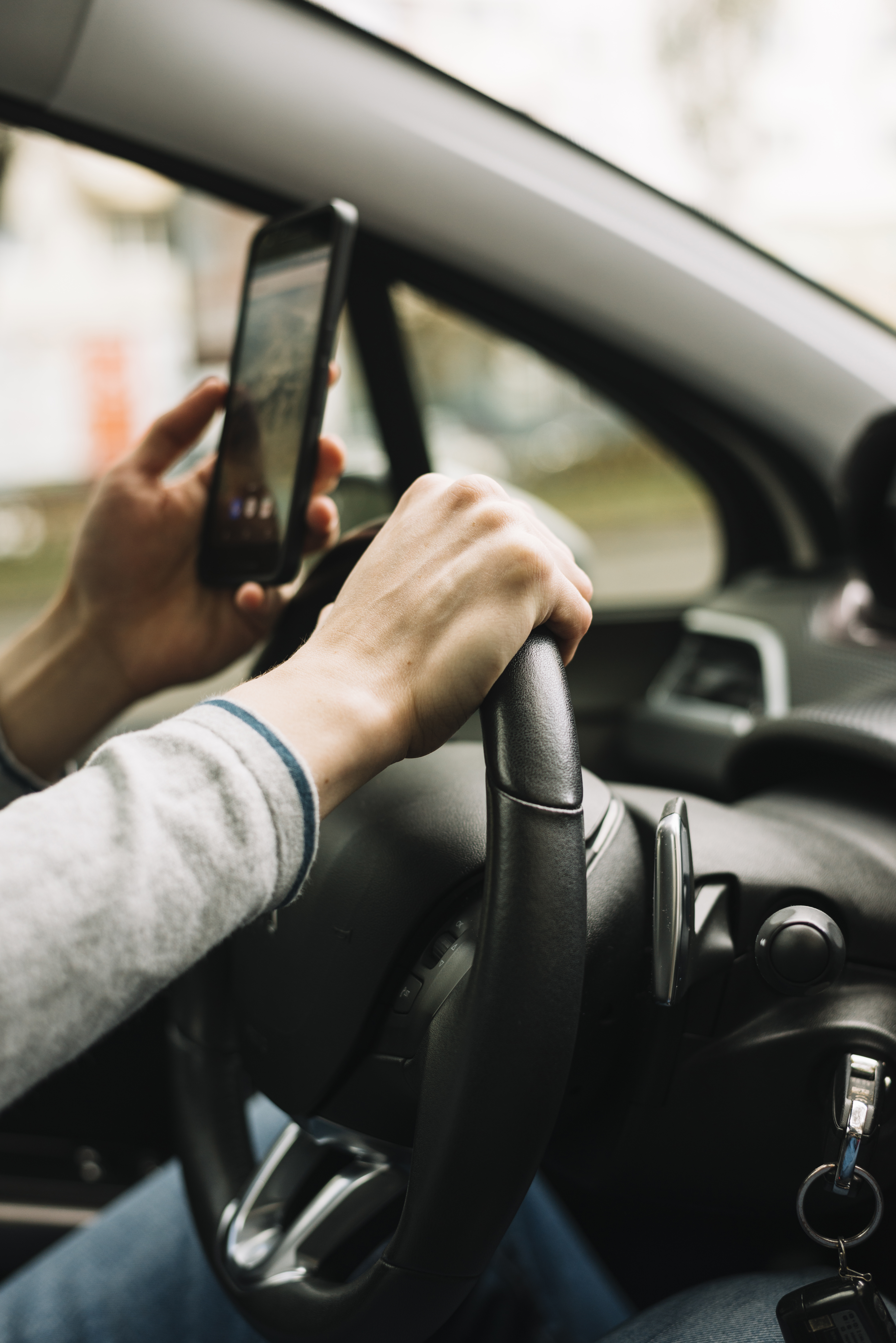
Distracted driving remains one of the most common causes of collisions nationwide, yet showing that...
Distracted driving remains one of the most common causes of collisions nationwide, yet showing that distraction directly contributed to a crash can be challenging. Attorneys often rely on multiple forms of evidence to piece together what happened, including digital records, witness accounts, and physical clues from the accident scene. When these sources are combined, they help paint a clear picture of how a driver’s lack of attention led to the crash.
With Distracted Driving Awareness Month approaching in April, it’s a timely reminder of how these different forms of evidence strengthen a negligence claim and support an injury victim’s case.
Digital Evidence: Understanding the Driver’s Device Activity
One of the strongest indicators of distraction comes from a driver’s phone or digital devices. Call history, message timestamps, or app activity can help show whether the driver was using their phone shortly before a collision. Even without reviewing message content, time markers alone can suggest the driver wasn’t focused on the road.
Accessing this information can be complicated. Phone carriers keep data for limited periods, and obtaining those records usually requires legal action. In some cases, forensic specialists may also analyze a device to uncover deleted content or background activity, such as switching between apps, checking navigation, or opening a messaging platform.
Additionally, social media behavior and location-based data often provide valuable clues. Many people scroll, post, or interact with apps while driving, and activity logs, check-ins, or status updates can help confirm whether a driver was active online at the time of the crash. When paired with phone records, these details give a clearer picture of the driver’s attention being on their device instead of the roadway.
Eyewitness Testimony and Video Evidence: Visible Signs of Distraction
Eyewitnesses, whether they are motorists, pedestrians, or passengers, play a major role in distracted driving cases. They may have noticed the at-fault driver looking down, holding a phone, or engaging in another distracting action right before the collision. Their statements help reinforce digital findings and add a human perspective to the overall account.
Some witnesses also recall important details immediately after the crash, such as the driver admitting they were on their phone or having an illuminated screen still visible in their lap. These observations can be crucial in demonstrating a lapse in attention.
In addition to witness accounts, video recordings often serve as compelling proof. Many intersections and roadways are monitored by surveillance or traffic cameras, and dashcams continue to grow in popularity among drivers. Video can show swerving, delayed braking, drifting from a lane, or a driver visibly interacting with a device. Because this footage is frequently overwritten within a short time frame, acting quickly is essential to ensure it is preserved.
Physical and Vehicle Data: On-Scene Clues That Reveal Inattention
Modern vehicles are equipped with Event Data Recorders (EDRs), commonly known as "black boxes," which capture key information in the seconds leading up to a crash. Speed, braking behavior, steering movement, and throttle use can reveal whether the driver reacted appropriately to road conditions.
If the data shows no attempt to brake or maneuver away from danger, it may indicate the driver never noticed the hazard—often a sign of distraction. When this type of record is evaluated alongside digital evidence or witness statements, it helps form a complete timeline of the incident.
Traditional accident scene investigation also remains vital. Skid marks, vehicle positioning, and damage patterns help reconstruct the events. For example, a rear-end collision involving a stationary vehicle with no associated braking marks can suggest the at-fault driver failed to pay attention. Accident reconstruction specialists regularly use this physical evidence to recreate how the collision occurred and determine what actions a reasonably attentive driver might have taken to prevent it.
Acting Quickly: The Importance of Timing
Although the evidence used to prove distracted driving can be powerful, much of it is time-sensitive. Phone carriers, social media platforms, and camera systems routinely delete or overwrite information. In addition, certain records cannot be requested until a legal claim has formally begun.
For these reasons, contacting a personal injury attorney as soon as possible is often crucial. A legal team can immediately send preservation requests to phone providers and digital platforms, secure available surveillance or dashcam video, examine vehicle data, gather physical evidence, and coordinate with accident reconstruction professionals. Waiting too long may result in the loss of evidence that could be essential to your case.
Taking the First Step Toward Recovery
Establishing that a driver was distracted requires more than suspicion—it involves timely and strategic gathering of multiple types of evidence. Whether the distraction involved texting, social media activity, or navigation apps, uncovering these details can significantly strengthen an injury claim.
If you were injured in a crash and believe distraction contributed to the accident, seek legal assistance promptly. An experienced attorney can help collect and protect the evidence needed to build a strong claim and pursue fair compensation. Reach out today to begin the process and ensure your rights are protected from the start.